
What forms the rental agreement?
The agreement is the quote we issue, the dates and equipment listed on it, and these terms taken together. Quotes are built from the details you provide through request a quote: the site address, the rental window, the unit count and the service frequency. If the job changes after delivery, the quote is revised rather than assumed. Nothing becomes binding until the rental is confirmed and scheduled.
Who is responsible for the equipment on site?
The equipment stays our property for the whole rental. You are responsible for it while it is on your site, which means keeping it accessible, keeping it upright, and not moving it without telling us. Portable units are not designed to be dragged across a lot or lifted by a forklift. A standard unit sits on a base about 44 inches square and stands about 92 inches tall, which makes it easy to tip if it is placed on soft or sloped ground, so follow the setbacks in the porta potty placement guide when you choose the spot. Damage beyond normal wear, loss, vandalism and tipping are the customer's responsibility, and we will document any such damage in writing before billing it.
What do you need from the site on delivery day?
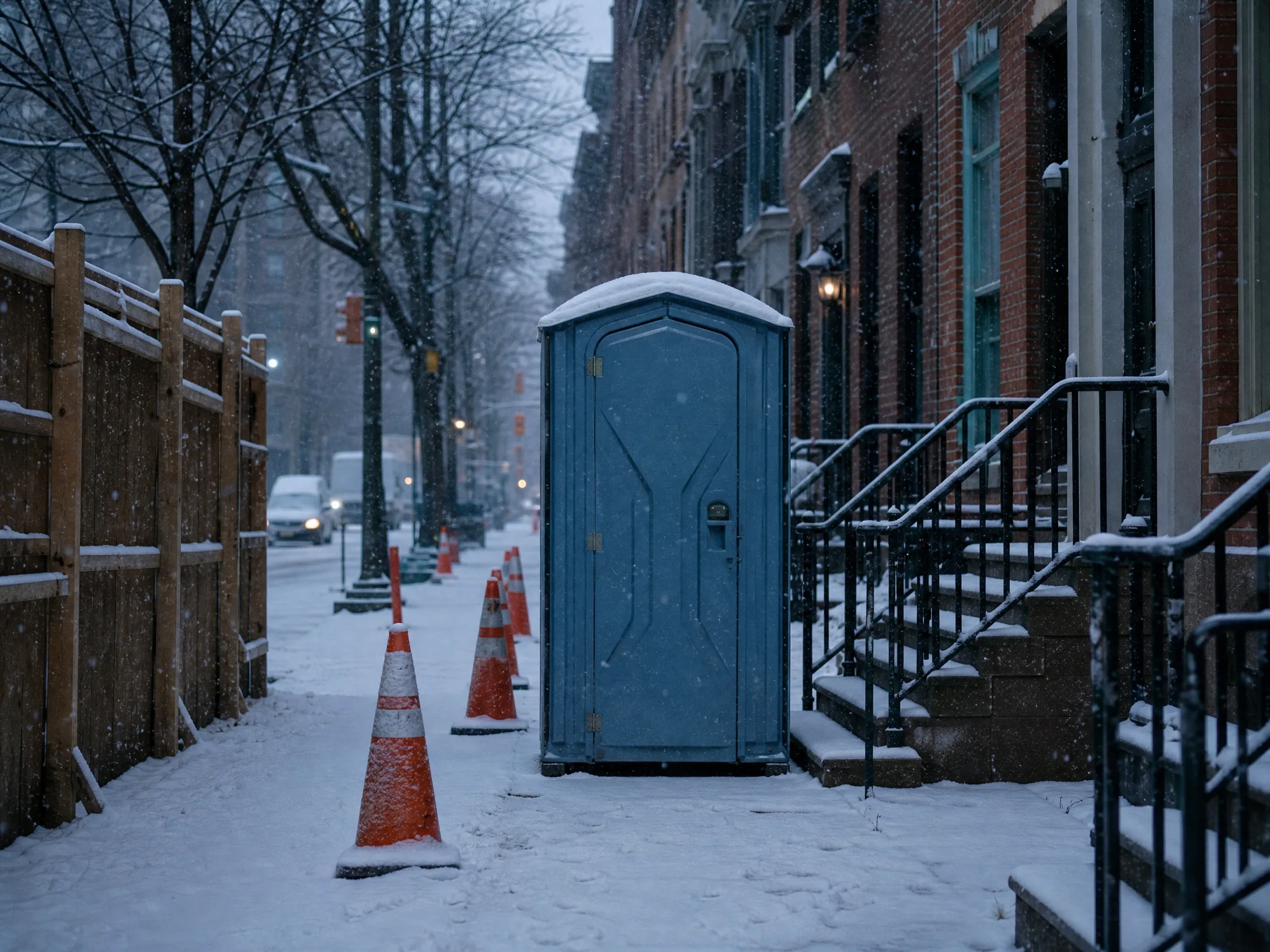
Clear, level, truck accessible ground and a spot the driver can reach without crossing landscaping, soft turf or an unmarked utility. For storage container rental, a mobile office trailer rental or a roll-off dumpster rental, the approach also needs overhead clearance. If the placement sits in the public right of way rather than on private property, a permit from the City of Columbus may be required, and the customer is responsible for placement compliance unless we have agreed in writing to file for it. See porta potty permit requirements and dumpster permit requirements.
How does service work during the rental?
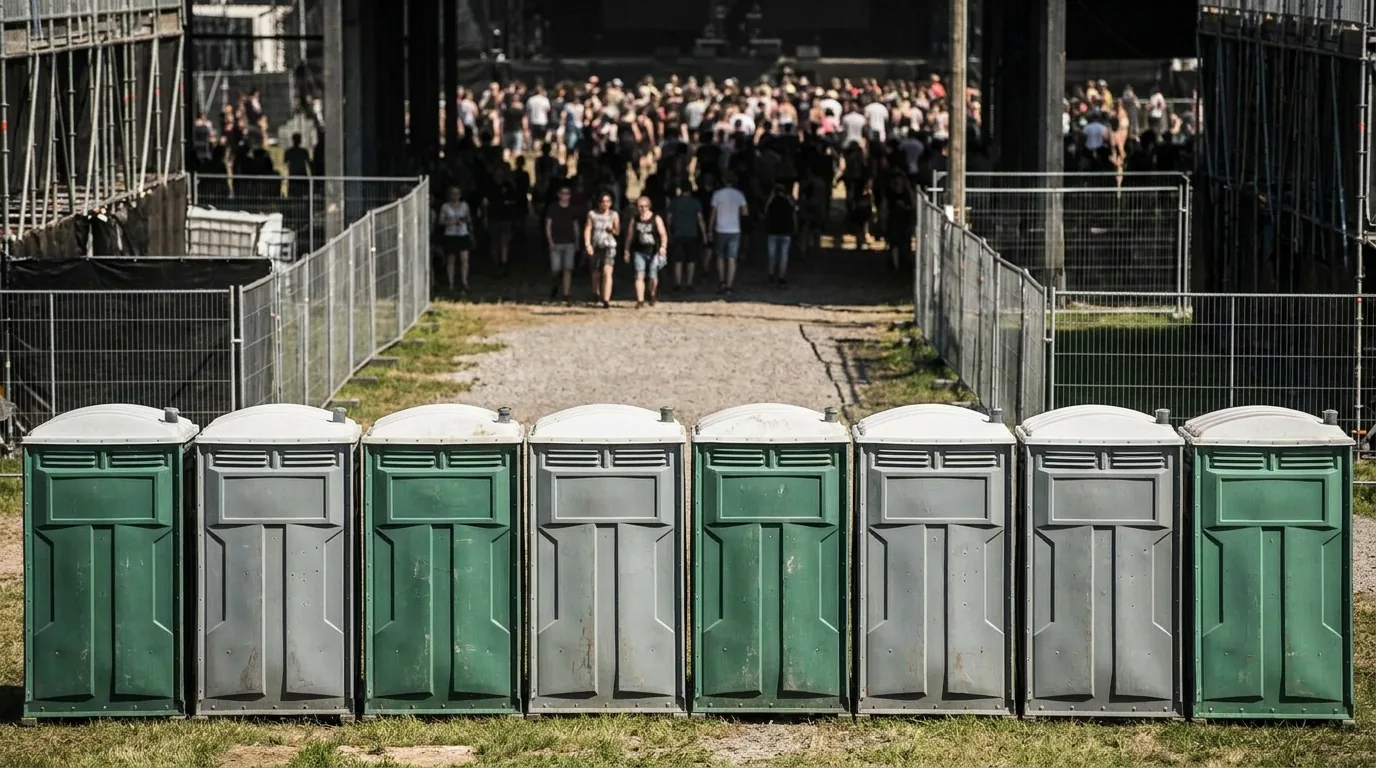
Standard rentals include scheduled service visits in which the unit is pumped, sanitized and restocked. Service frequency is set on the quote and should reflect actual use, because ANSI/PSAI Z4.3 works from one unit per ten workers over a 40 hour week with one service visit, and heavier use needs more. Additional visits can be added mid-rental. Service requires the same access as delivery, so if a truck cannot reach a unit on its scheduled day, that visit may be billed as attempted. Guidance on realistic frequency sits on how often are porta potties cleaned.
What can and cannot go into the equipment?
Portable restrooms and holding tanks are for human waste and the toilet paper we supply. Paint, solvents, fuel, cement slurry, food waste and construction debris damage the tank and the pump truck, and cleaning that up is billable. Dumpsters have their own exclusion list covering hazardous and prohibited materials, set out on what cannot go in a dumpster, along with tonnage caps described on dumpster weight limits. Grease interceptors are serviced only through grease trap pumping, not through restroom service, and septic systems are handled under septic pumping service.
Who is responsible for regulatory compliance?
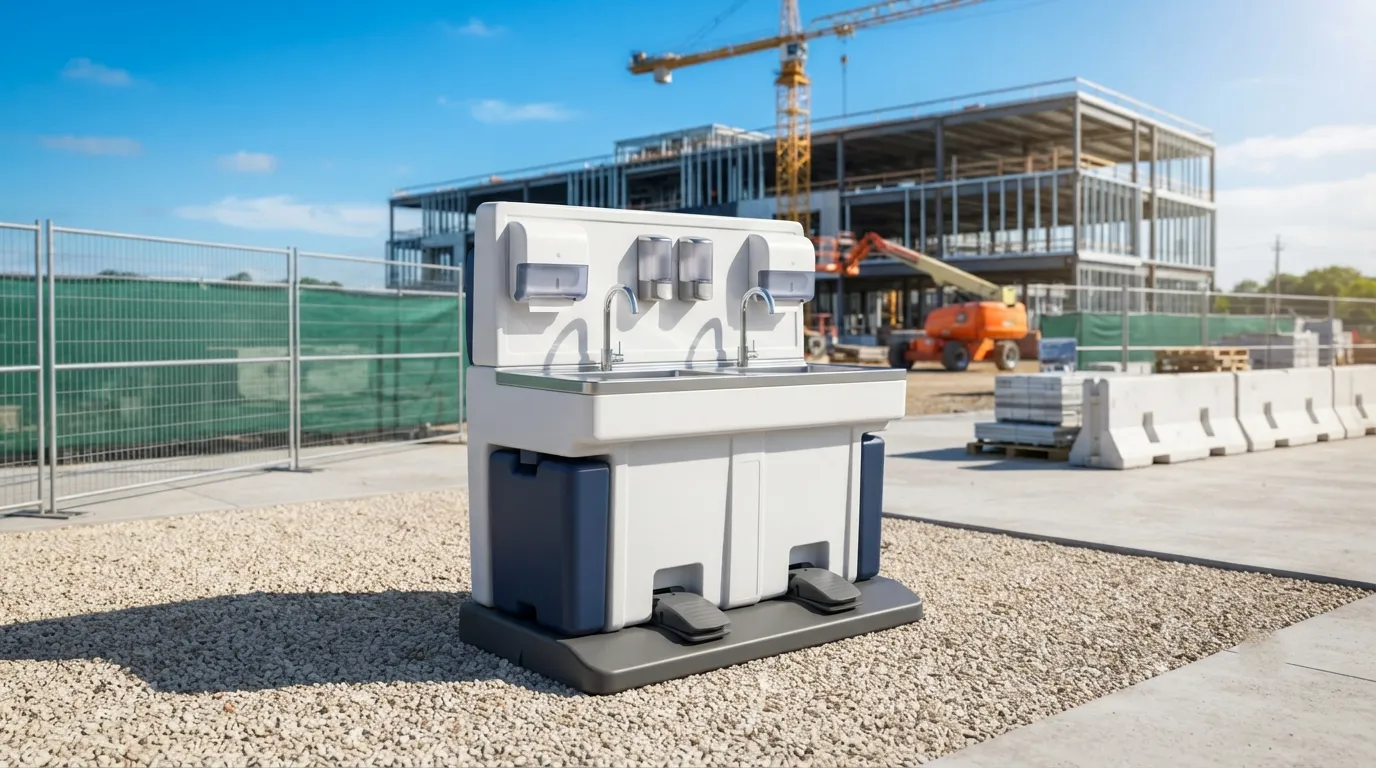
We supply equipment that meets its specification and we will tell you what the standards say. A standard construction site is governed by OSHA 1926.51(c)(1), which sets one toilet for 20 or fewer workers and one toilet seat and one urinal per 40 workers above that, and by OSHA 1926.51(f)(1), which requires washing facilities. Accessible units are built to the 2010 ADA Standards, including the 60 inch turning space of section 304.3 and the 32 inch clear door opening of section 404.2.3. Deciding how those rules apply to your workforce and your site is the employer's obligation. Reference material sits on osha portable toilet requirements and ada restroom requirements.
How are changes, cancellations and pickup handled?
Tell us as early as you can. Rental windows can usually be extended without a new delivery trip, and early pickup can often be arranged. Cancellation and change terms, including any charges for a cancelled or failed delivery, are stated on your written quote rather than assumed here, because they vary by equipment type and lead time.
Questions about any clause above are worth asking before the truck rolls, not after. Price your job through request a quote, or bring the specific question to us through contact and we will put the answer in writing on your quote.
Next step
Get a delivery date
Tell us the address, the dates and the headcount. We size the order and confirm the route.