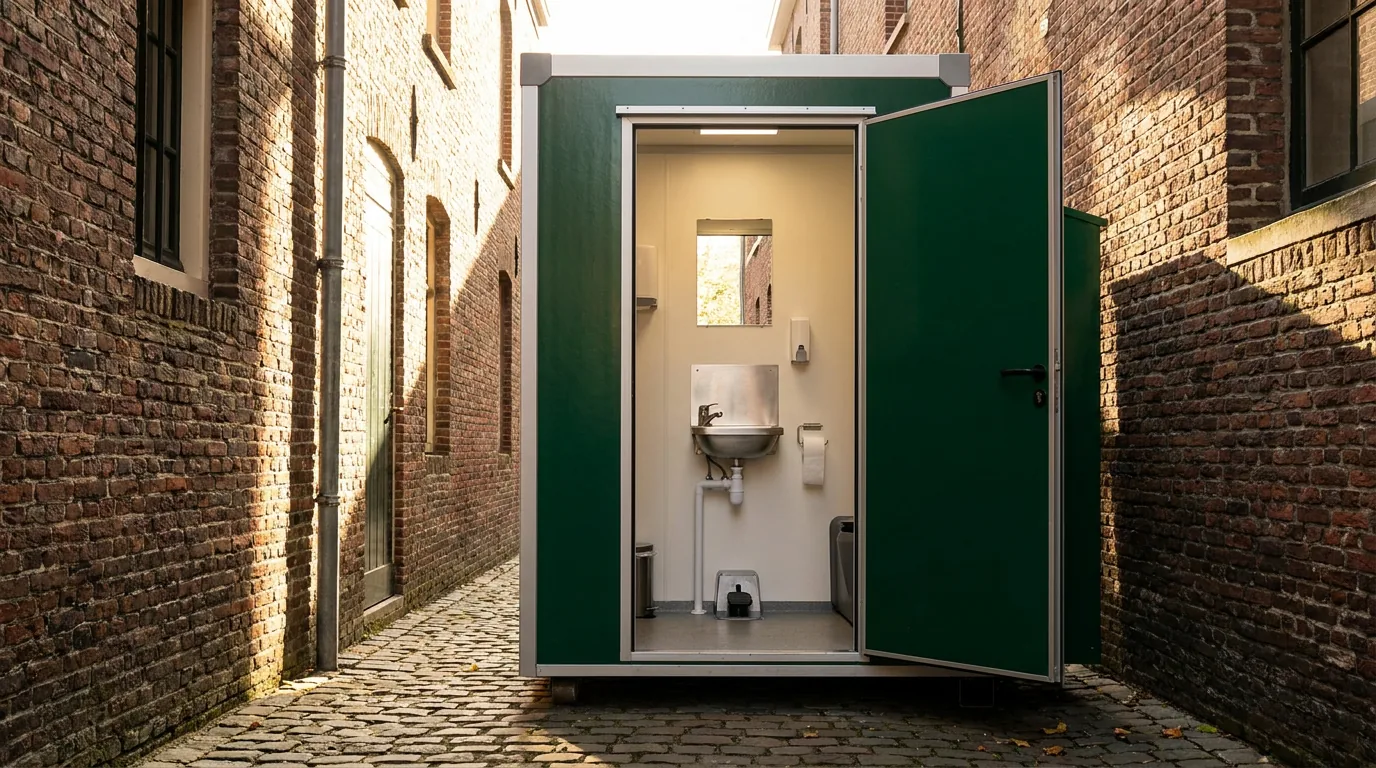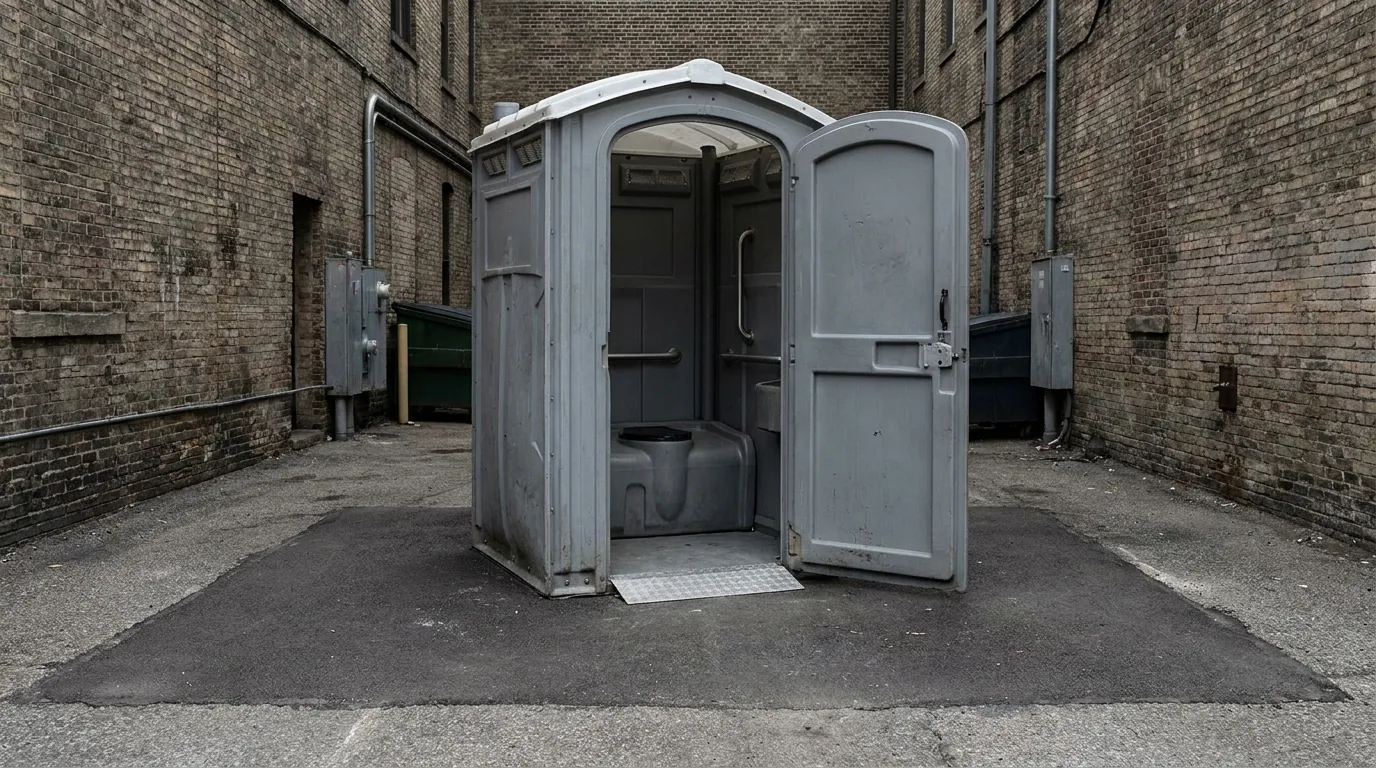
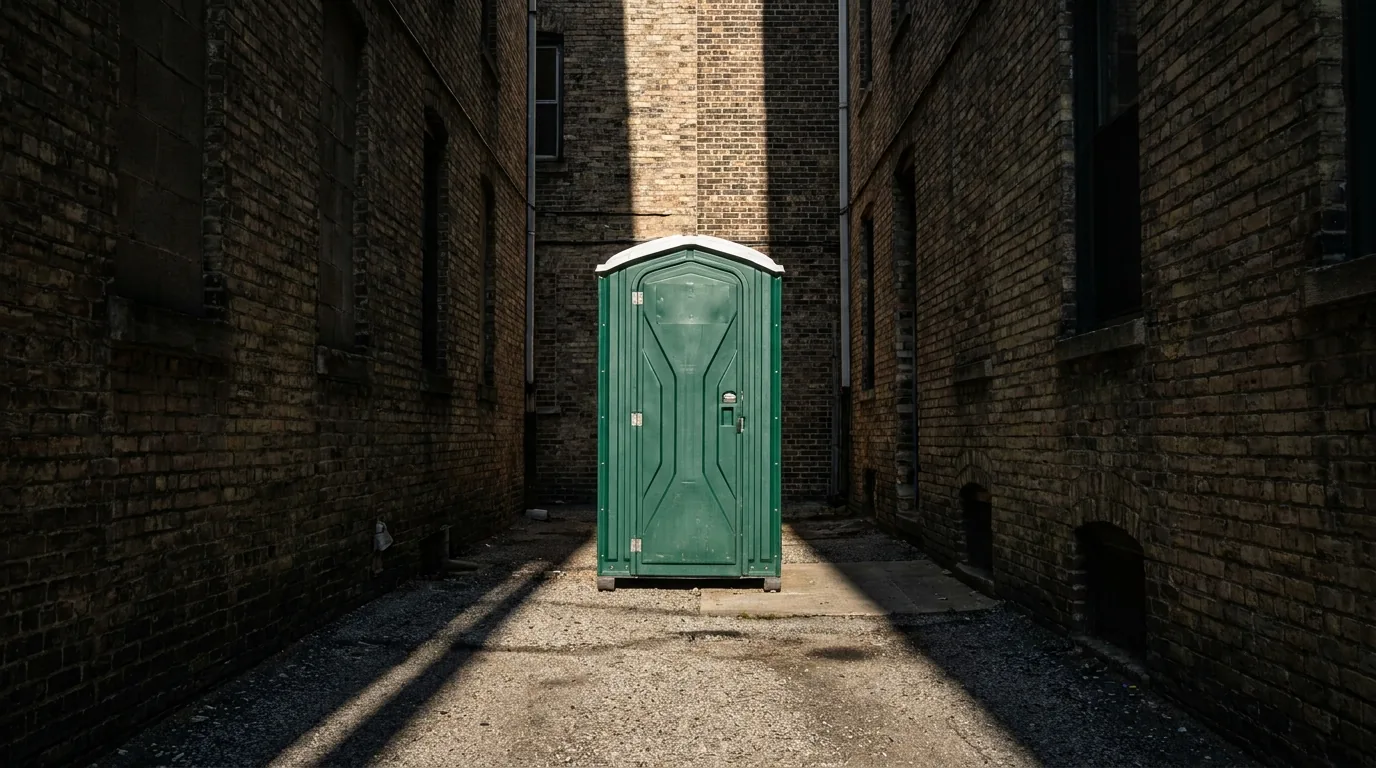
Standard porta potty
$125 to $250 a weekend
Columbus, OH
Festival restroom rental in Columbus, OH runs on headcount and hours, not guesswork. A one-day festival with 500 attendees generally needs somewhere around 10 to 14 standard units plus at least one ADA unit under ADA Standards section 213.2, scaled up for beer gardens or long lines.
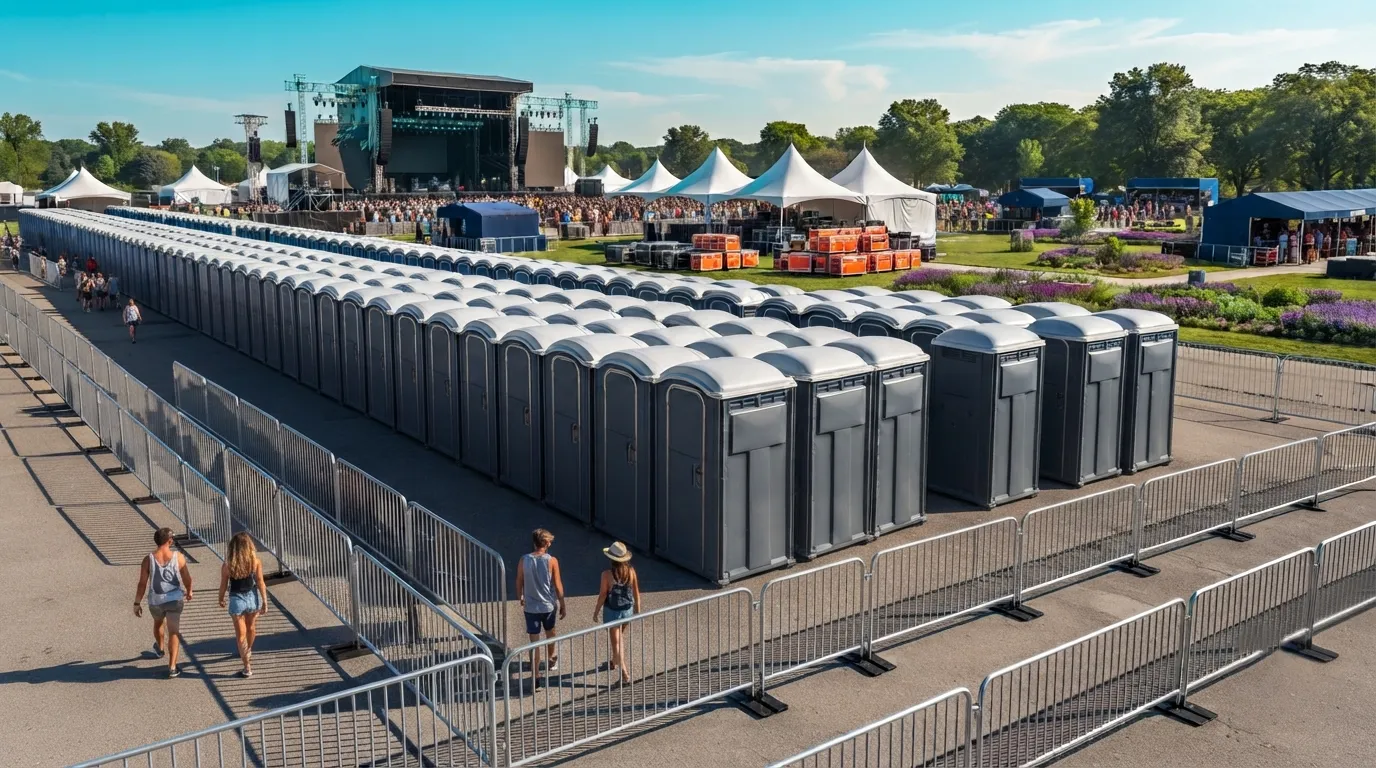
Start with attendance, then adjust for how long people stay and whether alcohol is served. Festivals aren't construction sites, but organizers still lean on the same math crews use for OSHA 1926.51(c) ratios as a sanity check: roughly one toilet per 20 to 50 people depending on duration. For a single-day event, standard porta potty rental units run a measured band of $200 to $800 for an event-length booking, and most festival contracts land inside that range. Add a deluxe flushable porta potty or two near VIP areas and expect a wider spread, since deluxe day rates carry more variance. Every cluster of standard units needs at least one accessible unit per ADA Standards section 213.2, and that unit needs a 60 inch turning circle per ADA Standards section 304.3.1 and a clear path at least 36 inches wide under ADA Standards section 403.5.1. If your festival footprint sits anywhere near Grandview Heights, about 5.0 miles west of downtown Columbus, or stretches toward Bexley, 6.2 miles southeast, plan your restroom clusters around walking distance, not just total count. Multi-day festivals often add a restroom trailer rental instead of stacking more standard units, especially when organizers want sinks with running water rather than hand sanitizer, since 29 CFR 1910.141(d)(2) specifies soap and towels or a hand-drying device, not sanitizer alone. Use our how many porta potties do I need guide to run your own numbers before you call.
Placement inside the public right-of-way in Columbus needs the city's sign-off before delivery day. Columbus City Code Chapter 903 requires an occupancy permit for anything placed in the right-of-way of a public street or alley for a construction-related purpose, issued through the Department of Public Service's Right-of-Way Permit Section at the Michael B. Coleman Government Center, 111 N. Front St. That office reviews excavation and occupancy permits together, and occupancy permits are generally capped at seven days unless a longer term gets approved in advance. Whether a portable toilet specifically falls under Chapter 903 the way a dumpster or a POD does isn't spelled out in the documents we reviewed. Chapter 903 names dumpsters, PODs and crane lifts by name but doesn't mention toilets directly, so if your festival footprint touches a public street, close with a curb lane, or sits on city-controlled land, that placement needs confirming with the city before you commit to a layout. Private lots, fairgrounds and park department land run under different rules than street right-of-way. We handle the porta potty placement guide logistics and can point you toward the right city contact, but we don't file the permit for you. Build in lead time. If your event also needs temporary fence rental or crowd control barrier rental to route foot traffic around restroom clusters, those go on the same site plan you'll submit for review.
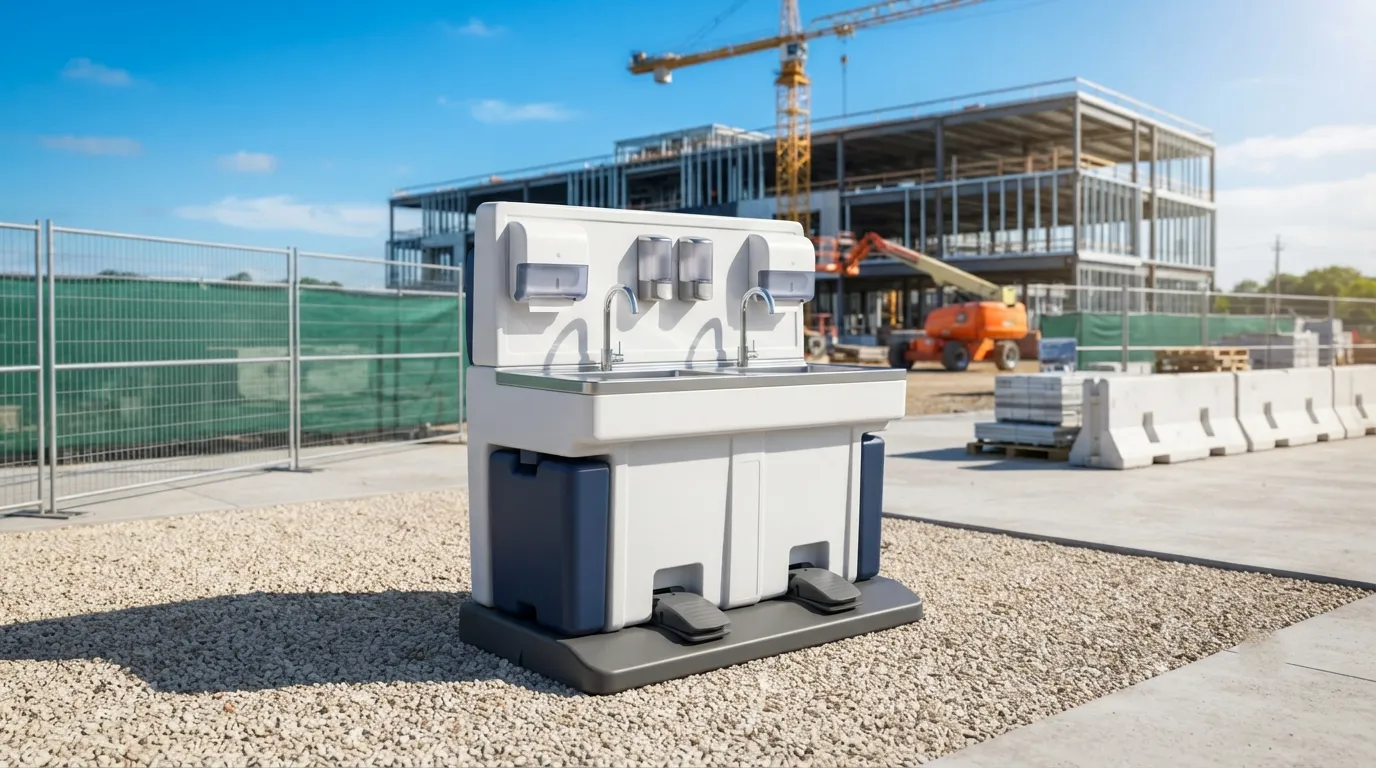
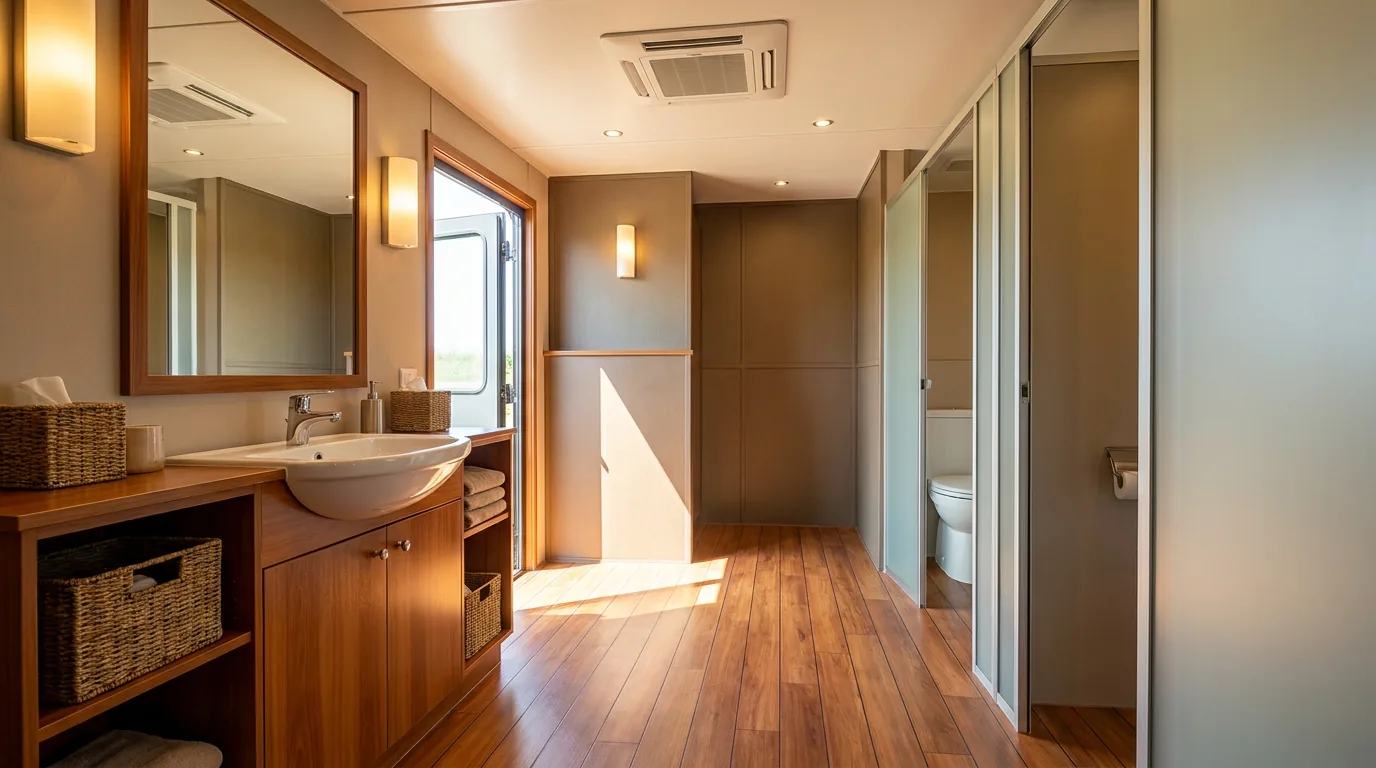
Attendee comfort, budget and event length usually decide it, not just headcount. A single-day community festival with a few hundred people rarely needs more than portable toilet rental units and a couple of handwashing station rental stations near food vendors. A two- or three-day music festival with beer sales is a different animal: expect heavier use per unit, more frequent service intervals, and real demand for a luxury restroom trailer or at minimum a 2 stall restroom trailer for staff and VIP ticket holders. Restroom trailers scale from a day rate to a full event-length rate, and event bookings for trailers sit well above single-day standard unit pricing, so weigh the stall count you actually need against the premium. Standard service intervals follow the ANSI/PSAI Z4.3 baseline of one visit per week for up to 10 users over a 40-hour week, but festivals compress that into daily servicing since usage is concentrated into a few hours rather than spread over five days. If your event runs food trucks doing any grill cleanup or degreasing with solvents, grease trap pumping may apply to a vendor's setup, and hosing down equipment with harsh chemicals triggers washing facility requirements under OSHA 1926.51(f)(1) for paints, coatings or contaminant exposure. Most festivals never trigger that clause, but food vendor rows sometimes do. Pair your restroom order with a dumpster rental cost estimate too, since festivals generate trash volume fast and a mismatched roll-off size is a common planning miss.
| unit | duration | low | typical | high |
|---|---|---|---|---|
| standard | event | 200 | 400 | 800 |
| ada | day | 200 | 230 | 400 |
| trailer | event | 2499 | 3500 | 3899 |
| deluxe | day | 85 | 300 | 1200 |
Book as soon as your site plan and attendance estimate are set, ideally 60 to 90 days out for larger events. Trailers and ADA units book first because supply is limited. If your event needs city right-of-way review under Chapter 903, add that lead time too.
Yes. ADA Standards section 213.2 requires at least one accessible unit in any cluster of single-user toilets, even a small cluster. It's a floor, not a target tied to attendance size.
Yes. A portable sink rental or standalone hand sanitizer station rental works alongside standard units for food vendor rows. Standard units alone don't satisfy handwashing needs where food is served.
Call for emergency service; a standard tank holds 60 to 70 gallons and heavy festival use can fill it faster than a weekly schedule. We run emergency porta potty rental support for exactly this during multi-day events.
Yes. Columbus sees an average of 78.5 days a year with 0.10 inch or more of precipitation, per NOAA. Muddy ground near units is common; plan matting or gravel pads under high-traffic clusters, especially near festival restroom rental clusters set on grass.
What we rent
Typical Columbus ranges, not a quote. Delivery is $50 to $150 and a weekly service visit $30 to $60. See the full cost breakdown.
$125 to $250 a weekend
$200 to $350 a weekend
$199 to $300 a weekend
Quoted by stall count
The rest of the yard
We deliver across Franklin County and the surrounding metro:
Next step
Tell us the address, the dates and the headcount. We size the order and confirm the route.