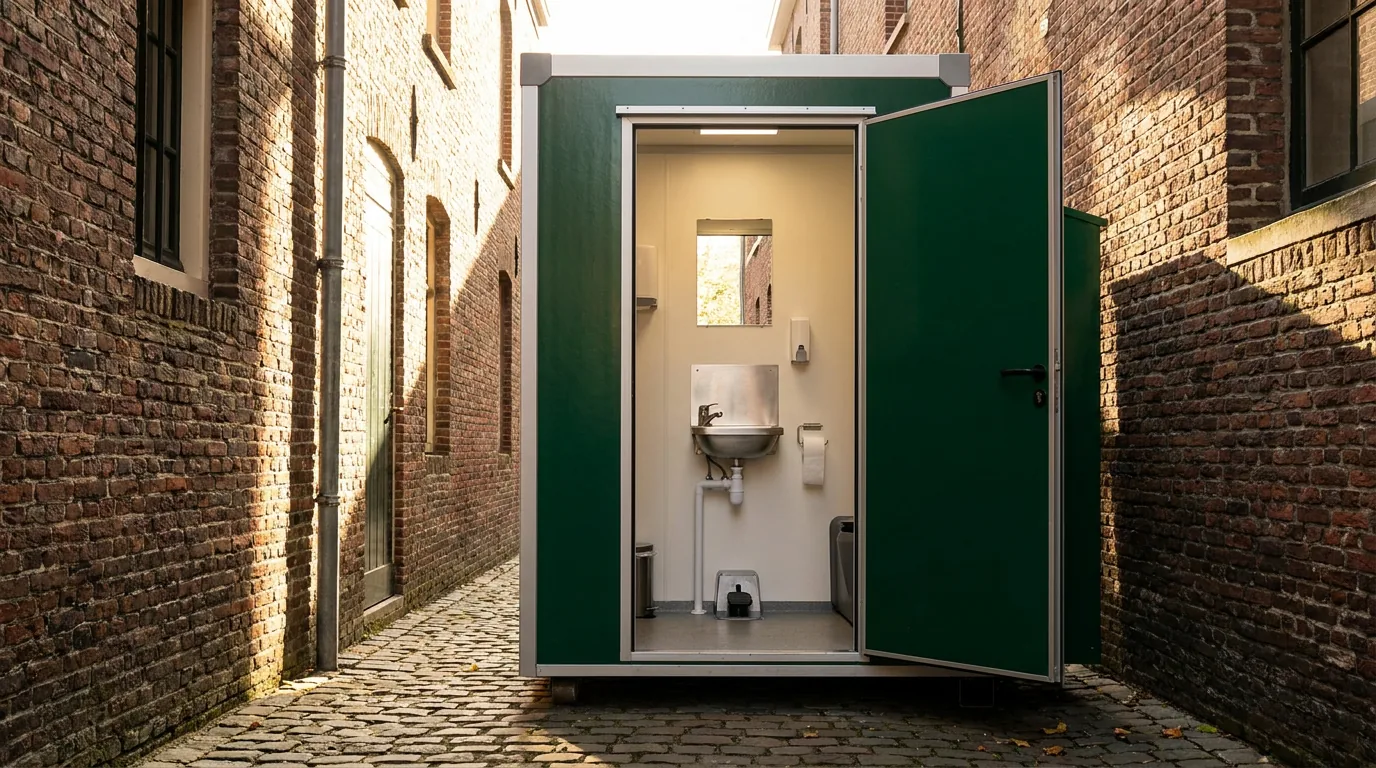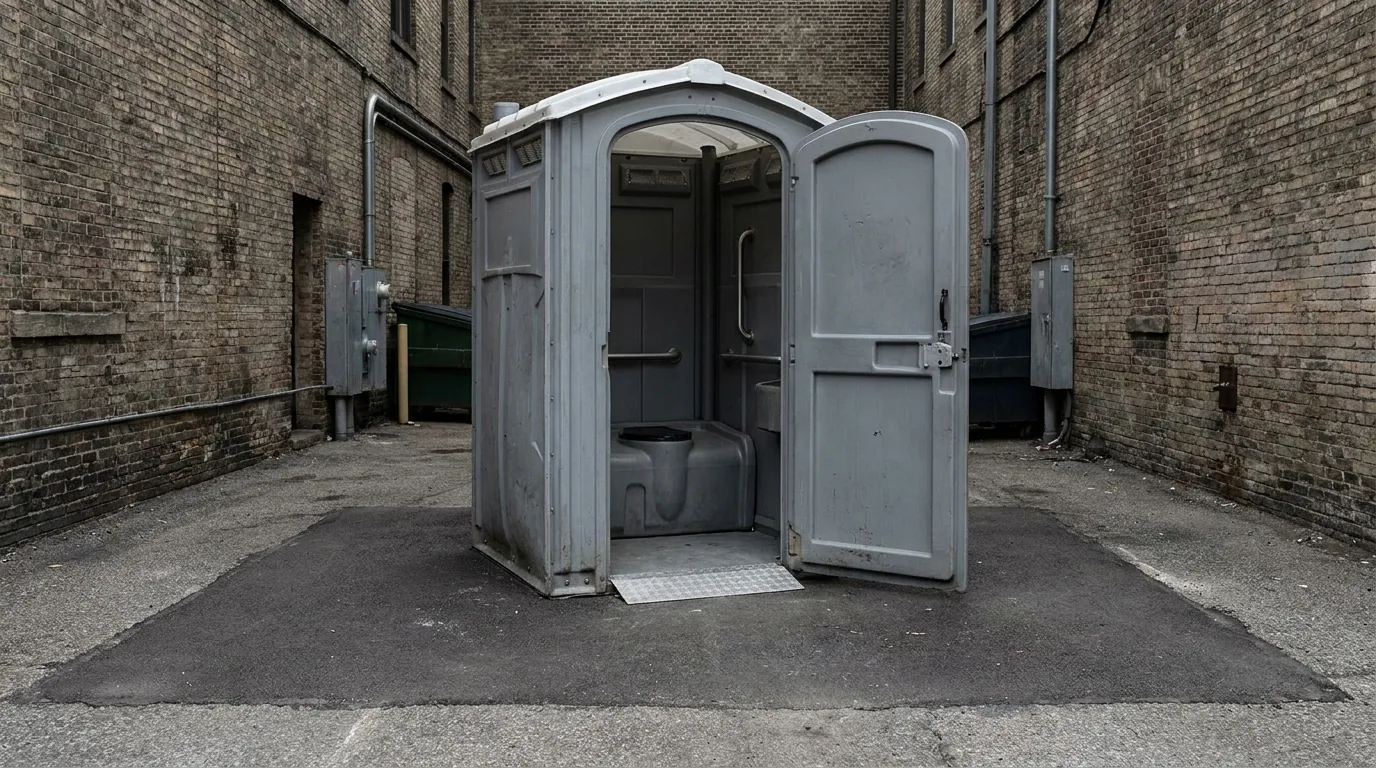

Standard porta potty
$125 to $250 a weekend
Columbus, OH
Septic tank pumping in Columbus runs $150 to $300 for a standard day-rate service call, based on tank size and access. Most homes with a 1,000 gallon tank fall in that range. Grease traps and harder-to-reach tanks push toward the top end. Columbus Porta Pros quotes the job after seeing the tank, not before.

A typical service call for a home septic tank lands between $150 and $300 for the day, and that band covers most 1,000 gallon tanks around Columbus. Where your price falls inside that range depends on how far the truck has to travel, how deep the tank sits, and whether the lid needs digging out or already has a riser. Homes out toward Delaware, 24.7 miles north of Columbus, sometimes carry a higher trip charge than a job inside the city. If you are weighing a full trailer setup instead, our restroom trailer rental cost page breaks that down separately. Septic work is priced by the job, not a flat rate, so ask for a number before the truck rolls. Columbus Porta Pros gives that number over the phone, not after the pump starts.
| service | duration | low | typical | high |
|---|---|---|---|---|
| septic pumping | day | $150 | $250 | $300 |
| septic pumping | weekend | $50 | $100 | $150 |
Weekend service calls for smaller jobs, like a holding tank top-off, tend to sit lower than a full weekday pump-out because the scope is smaller, not because the rate is discounted. If your property runs a holding tank rental instead of a fixed septic system, that pricing works differently and is worth checking on its own page.
Access is the biggest swing factor. A tank buried under three feet of soil with no riser costs more to open than one with a lid at grade. Tank size matters too: a 1,000 gallon septic tank pumping job is the baseline most Columbus homes fall into, but larger tanks or older multi-chamber systems take longer to fully clear. According to guidance referenced by the Ohio Department of Health sewage treatment system program, a residential septic tank is typically pumped every 3 to 5 years, and that interval is driven by tank size and household size, not a fixed calendar date. Skipping a cycle does not save money long term; it usually means a harder pump later and a higher risk of backup. If your tank is already showing signs of trouble, our septic tank warning signs page walks through what to watch for before it becomes an emergency septic service call. For general upkeep timing, see how often to pump a septic tank.
No, grease traps are priced and scheduled differently because they fill on a different clock. A grease interceptor gets pumped when fats, oils, grease and solids reach 25 percent of the liquid depth, which for a busy kitchen can mean monthly service instead of a multi-year cycle. That is a maintenance rhythm, not a one-time job, so restaurants and commercial kitchens in Columbus typically set up a standing schedule rather than calling only when there is a problem. See grease trap pumping for how that service is structured separately from home septic work. If you are budgeting for both a residential tank and a commercial grease trap on the same property, price them as two separate line items, not one combined estimate.

Yes, septage haulers in Ohio register through the local health district system, not a single statewide office. Ohio Revised Code Chapter 3718 and Ohio Administrative Code Rule 3701-29-03 require septic service providers and septage haulers to register with each local health district where they perform work, and land application sites need a permit from that health district before septage is applied there, valid for one year. Because Columbus spans Franklin, Delaware and Fairfield counties, the specific local health district that applies can vary by job site, and that detail should be confirmed for your property rather than assumed. This registration requirement is separate from any right-of-way permit; dumpster and container placement in the Columbus public right-of-way falls under City Code Chapter 903 instead, which is a different process entirely covered on our dumpster permit requirements page. A homeowner does not need to worry about hauler registration directly. It is the company's responsibility, but it is fair to ask who holds it.

Distance from the service base, tank depth, and the condition of the tank at arrival all move the price within the band. A property in Bexley, 6.2 miles southeast of Columbus, is a shorter trip than one near Westerville, 14.2 miles north, and trip distance factors into scheduling even when it does not change the base service price. A tank that has never been pumped, or one that has gone well past its 3 to 5 year window, often has more solids built up, which takes longer to clear and can nudge the job toward the higher end of the $150 to $300 day rate. Older homes near Grandview Heights, 5.0 miles west, sometimes have tanks installed before modern access standards, meaning the crew digs before they pump. None of that changes the quoted range, but it does change where in the range your job lands. For general sanitation questions unrelated to septic systems, our FAQ page covers portable restroom basics separately.
If your job also involves a construction dumpster, temporary fencing, or a construction site services package alongside septic work, price each service on its own line. A septic pump-out and a roll-off dumpster rental are unrelated cost bands and should never be bundled into a single guess. The same goes for event work: a wedding or festival needing event restroom rental or wedding restroom rental support runs on a completely different pricing structure than a home septic tank. Ask for a written quote through request a quote that separates each service by line so you can see exactly what you are paying for.
Most 1,000 gallon tanks fall inside the standard $150 to $300 day-rate band, with typical jobs landing near the middle. Depth, access, and how long since the last pump all affect where your job lands in that range.
Every 3 to 5 years for most residential tanks, based on tank size and household size, per Ohio Department of Health guidance. Larger households or smaller tanks may need more frequent service. See how often to pump a septic tank for detail.
Weekend service calls run $50 to $150 for smaller jobs, but that reflects smaller scope, not a discount on full pump-outs. A full weekday tank service is usually the better comparison for planning a budget.
The homeowner does not need one. The hauler needs to be registered with the appropriate local health district under Ohio Administrative Code Rule 3701-29-03, which is the company's responsibility, not yours.
Septic tanks run on a multi-year cycle; grease traps fill faster and get pumped when grease and solids reach 25 percent of liquid depth. See grease trap pumping for commercial kitchen scheduling.
What we rent
Typical Columbus ranges, not a quote. Delivery is $50 to $150 and a weekly service visit $30 to $60. See the full cost breakdown.
$125 to $250 a weekend
$200 to $350 a weekend
$199 to $300 a weekend
Quoted by stall count
The rest of the yard
We deliver across Franklin County and the surrounding metro:
Next step
Tell us the address, the dates and the headcount. We size the order and confirm the route.