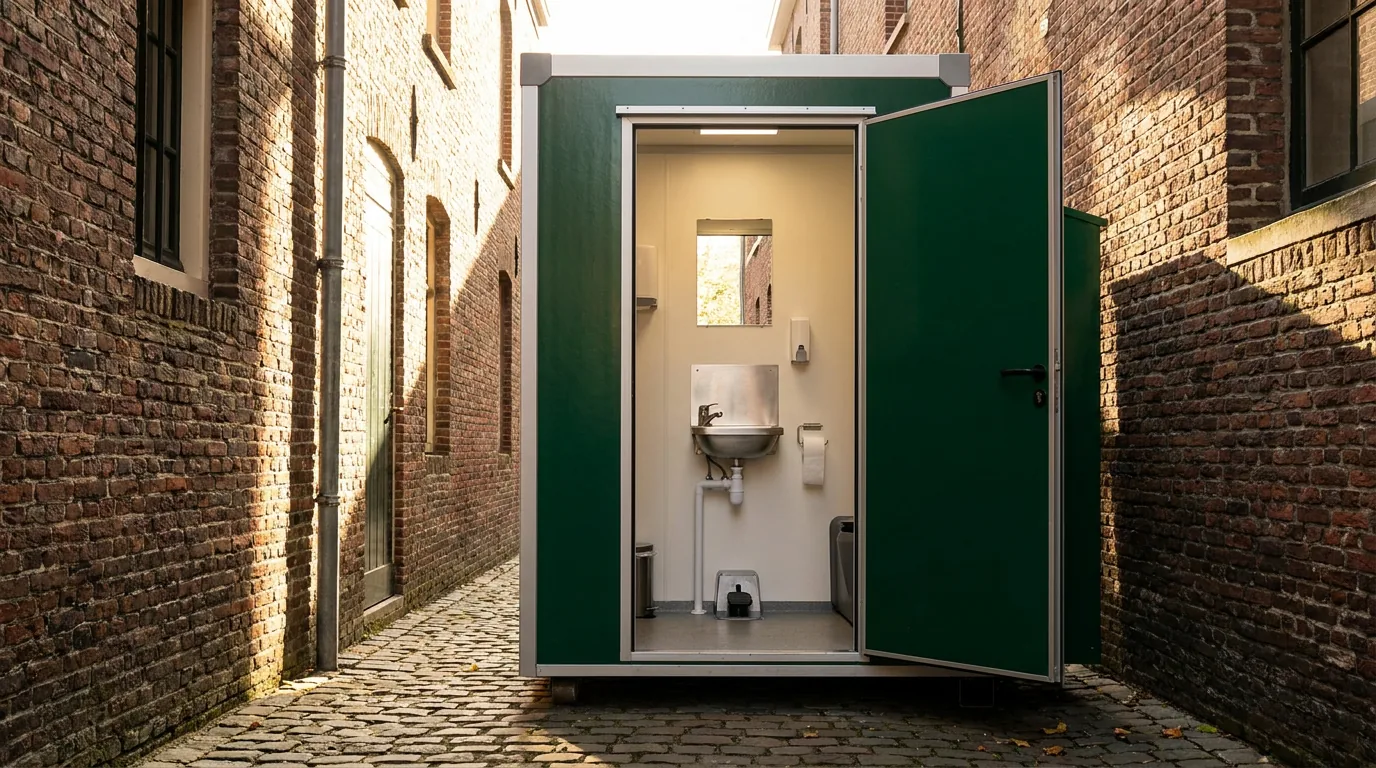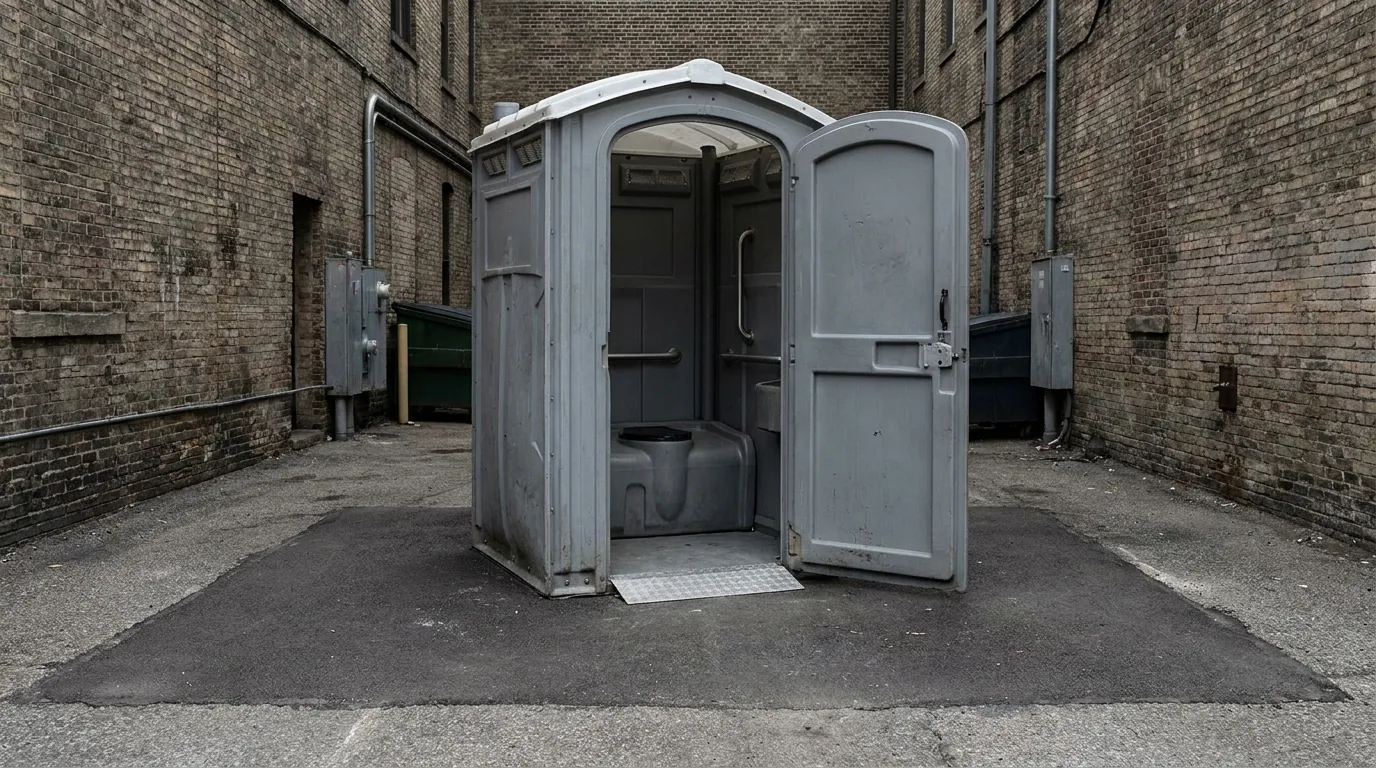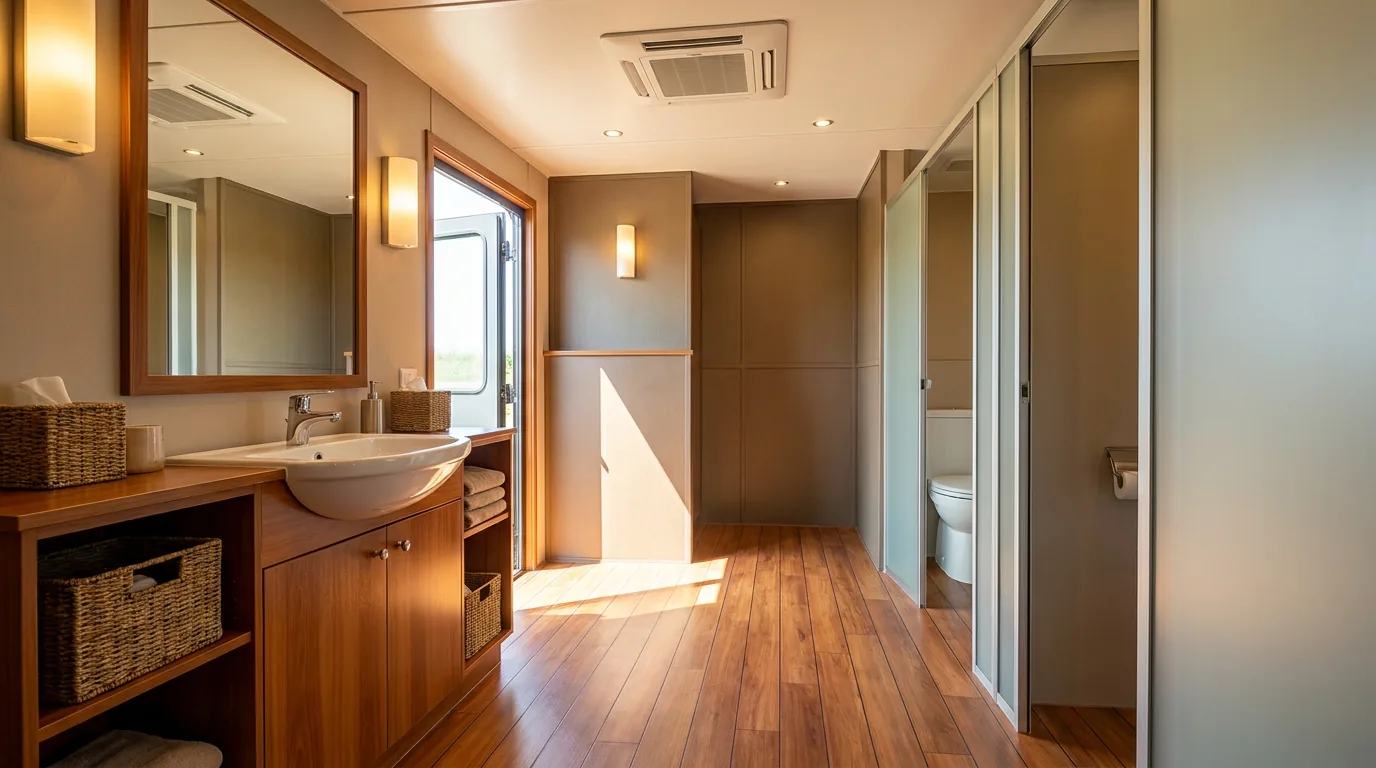
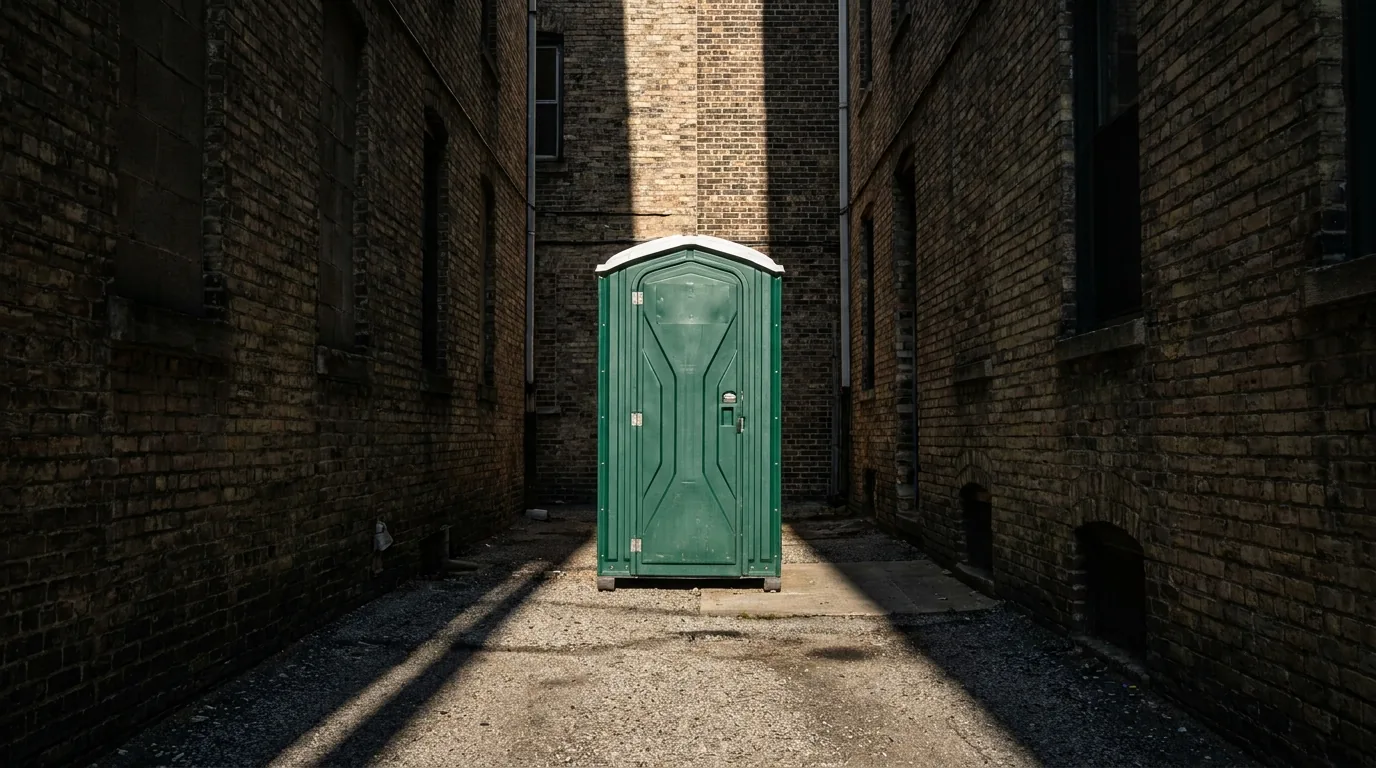
Standard porta potty
$125 to $250 a weekend
Columbus, OH
OSHA requires 1 toilet facility for every 20 workers on a construction site, per 1926.51(c)(1), scaling up as headcount grows. Columbus contractors sizing a job site should start there, then check placement against city right-of-way rules before the truck rolls.
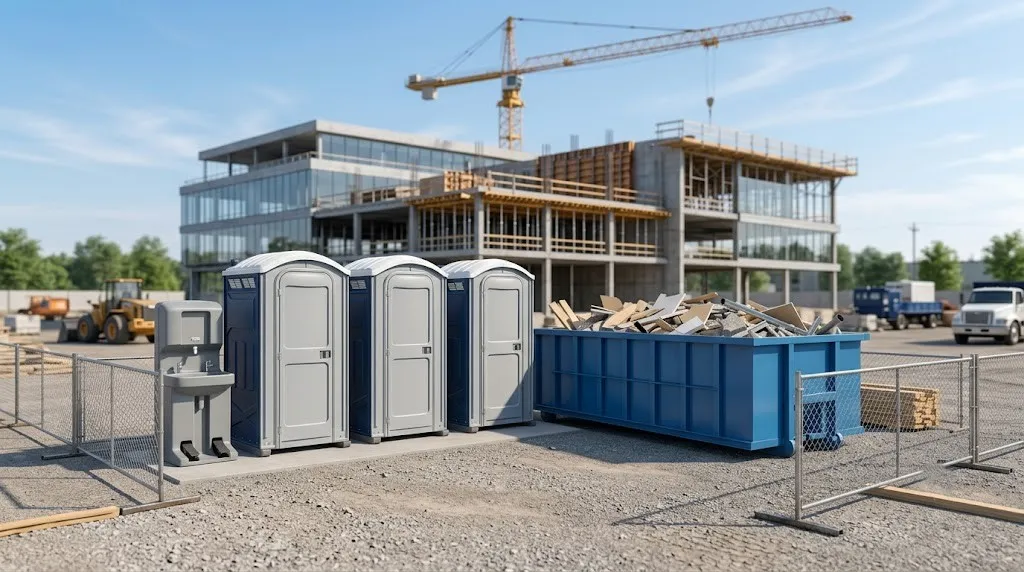
The math is simple once you know your crew size. Under OSHA 1926.51(c)(1), a site with 20 workers or fewer needs 1 toilet facility. From 20 up to 200 workers, you need 1 toilet seat and 1 urinal per 40 workers. At 200 or more, that ratio drops to 1 seat and 1 urinal per 50 workers. A general industry job in Columbus, not a construction site, falls under 1910.141(c)(1)(i) instead, which uses its own employee-count table. Farms with hand-labor crews fall under a different rule entirely: 1928.110 calls for one facility per 20 employees, reachable within a quarter mile walk, which matters for farm and agricultural restrooms around Franklin County. If you are not sure which category your job fits, our OSHA guide walks through it, and how many porta potties do I need breaks the ratio down by crew size directly. Get the count wrong and you either pay for units sitting empty or scramble for emergency delivery mid-project.
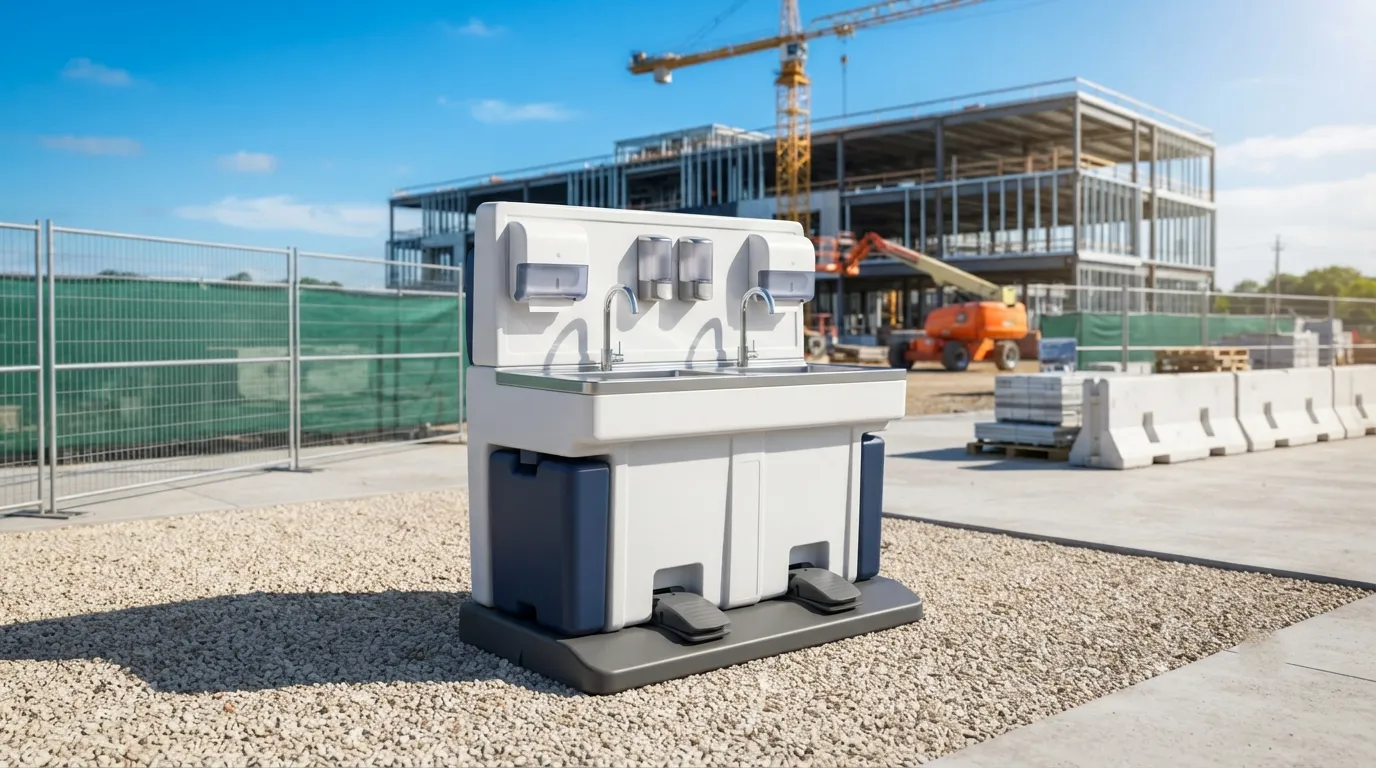
OSHA's 1926.51(c)(1) sets counts, not distance, for construction toilets. The quarter-mile walk distance is specific to 1928.110's agricultural field sanitation rule, not general construction. What OSHA does require, separately, is potable water on site under 1926.51(a)(1). If your crew is applying paints, coatings, herbicides or insecticides, 1926.51(f)(1) kicks in and requires washing facilities for that contaminant exposure specifically, it is not a blanket handwashing mandate. Pair a handwashing station rental with your toilets on any job involving those materials. For general sanitation without that trigger, a hand sanitizer station may cover the gap, though 29 CFR 1910.141(d)2 requires soap and towels or a hand-drying device where washing facilities are provided, sanitizer alone does not satisfy it. Placement inside Columbus city limits also has to clear local rules. Columbus City Code Chapter 903 requires an occupancy permit for anything placed in the public right-of-way, and while the city's own guidance names dumpsters, PODs and crane lifts explicitly, it does not name portable toilets, so that placement needs confirming with the City of Columbus Department of Public Service before you set a unit at the curb.
Yes, once you cluster multiple single-user units. ADA Standards 213.2 requires that at least 5 percent of clustered portable toilets be accessible, and never fewer than one unit even on a small cluster. An ADA accessible porta potty has to meet real dimensions: a 60 inch turning circle under 304.3.1, a 32 inch clear door opening under 404.2.3, and a 36 inch clear route under 403.5.1. Reach ranges matter too, 308.2.1 sets a 48 inch high and 15 inch low limit for forward reach, and 309.4 requires operable parts usable with one hand and no more than 5 pounds of force. If a ramp is needed to reach the unit, 405.2 caps the running slope at 1 to 12. Event organizers running a festival restroom rental or a marathon and race restroom setup in Columbus need to plan this into the layout, not bolt it on after the fact. A weekly ADA unit typically runs 120 to 240 dollars depending on term and provider.
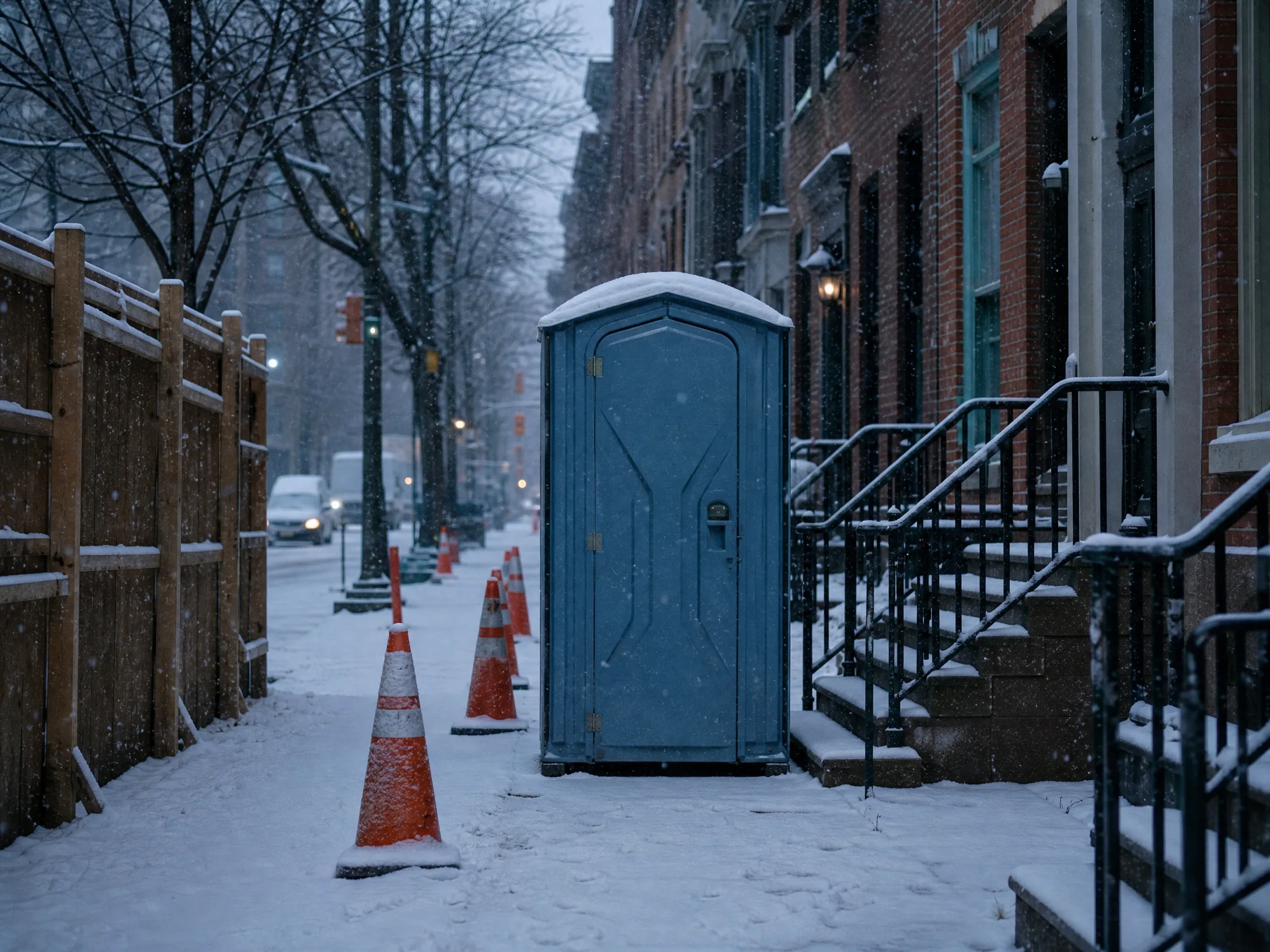
OSHA sets a floor, not a comfort level. ANSI/PSAI Z4.3 sets the baseline service interval at once per week for up to 10 users over a 40 hour week, but a crew working extended hours or a hot Columbus summer stretch needs more frequent pumping to avoid a unit going foul before the next scheduled visit. Below is what typical rental terms cost for a standard porta potty rental in the Columbus market.
| Term | Low | Typical | High |
|---|---|---|---|
| Day | $100 | $150 | $350 |
| Week | $130 | $200 | $500 |
| Month | $125 | $200 | $325 |
A porta potty rental cost breakdown covers delivery fees separately, which typically run 50 to 150 dollars for a weekly rental. If your job runs near Grandview Heights, 5.0 miles west of downtown Columbus, or out toward Westerville, 14.2 miles north, factor delivery distance into your timeline. Sites needing dumpsters alongside toilets should check dumpster permit requirements, since Chapter 903 governs that placement explicitly, unlike toilets. A storage container rental on the same lot may also need a 903 permit if it sits in the right-of-way rather than fully on private property.
At 50 workers, you fall in the 20-to-200 band: 1 toilet seat and 1 urinal per 40 workers, so a 50 person crew needs 2 of each under 1926.51(c)(1). Round up, not down, when the headcount sits between ratio breakpoints.
No. General potable water is required under 1926.51(a)(1), but washing facilities under 1926.51(f)(1) only trigger when workers apply paints, coatings, herbicides or insecticides. Outside that context, OSHA does not mandate a dedicated handwashing station.
That is not verified either way. Chapter 903 names dumpsters, PODs and crane lifts, but not portable toilets specifically. Confirm with the City of Columbus Department of Public Service before placing any unit off private property.
No. Ohio follows federal OSHA rather than running a state plan like California's Cal OSHA, which has its own portable toilet requirements for construction. Columbus contractors use 1926.51(c)(1) directly, with no separate state overlay.
ANSI/PSAI Z4.3 sets a baseline of one service visit per week for up to 10 users across a 40 hour week. Heavier use, larger crews or hot weather push that interval shorter, which a septic pumping service provider can schedule around your job.
What we rent
Typical Columbus ranges, not a quote. Delivery is $50 to $150 and a weekly service visit $30 to $60. See the full cost breakdown.
$125 to $250 a weekend
$200 to $350 a weekend
$199 to $300 a weekend
Quoted by stall count
The rest of the yard
We deliver across Franklin County and the surrounding metro:
Next step
Tell us the address, the dates and the headcount. We size the order and confirm the route.