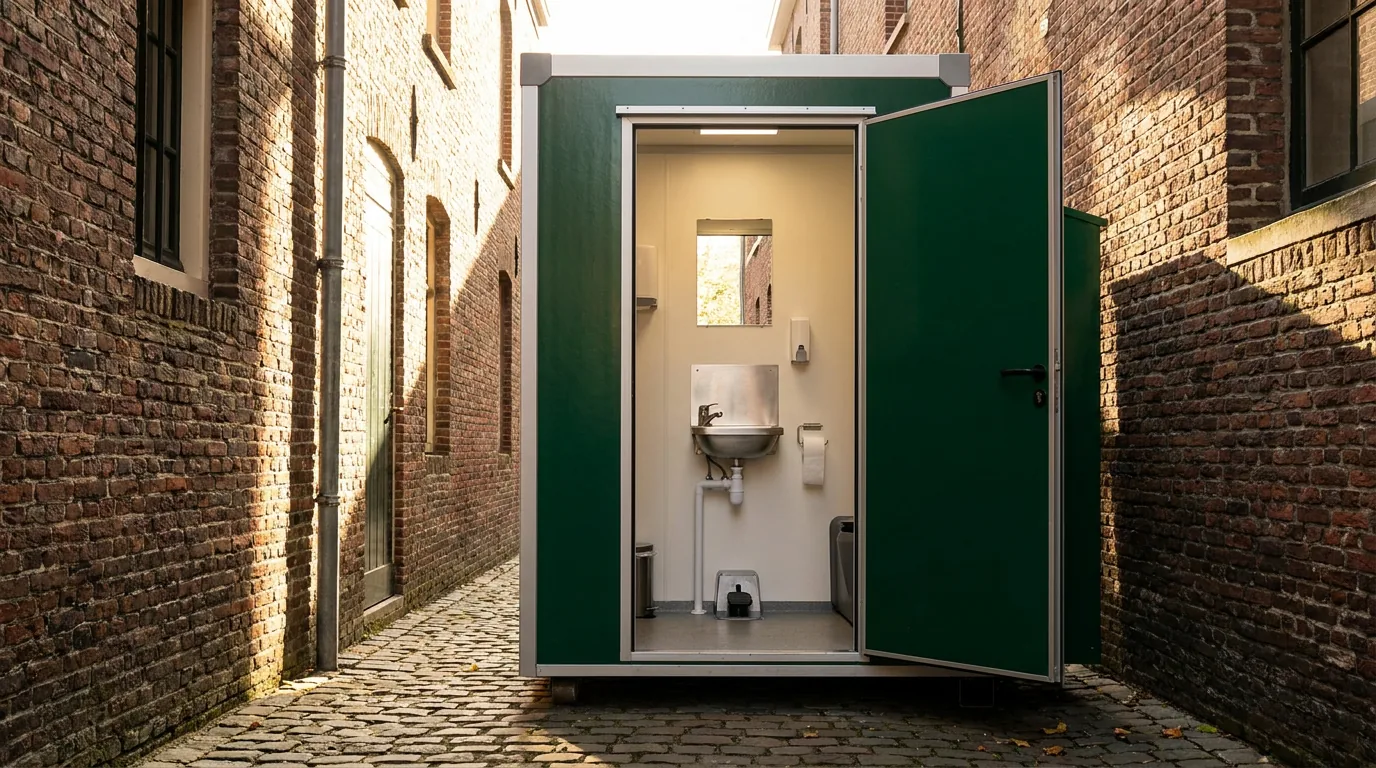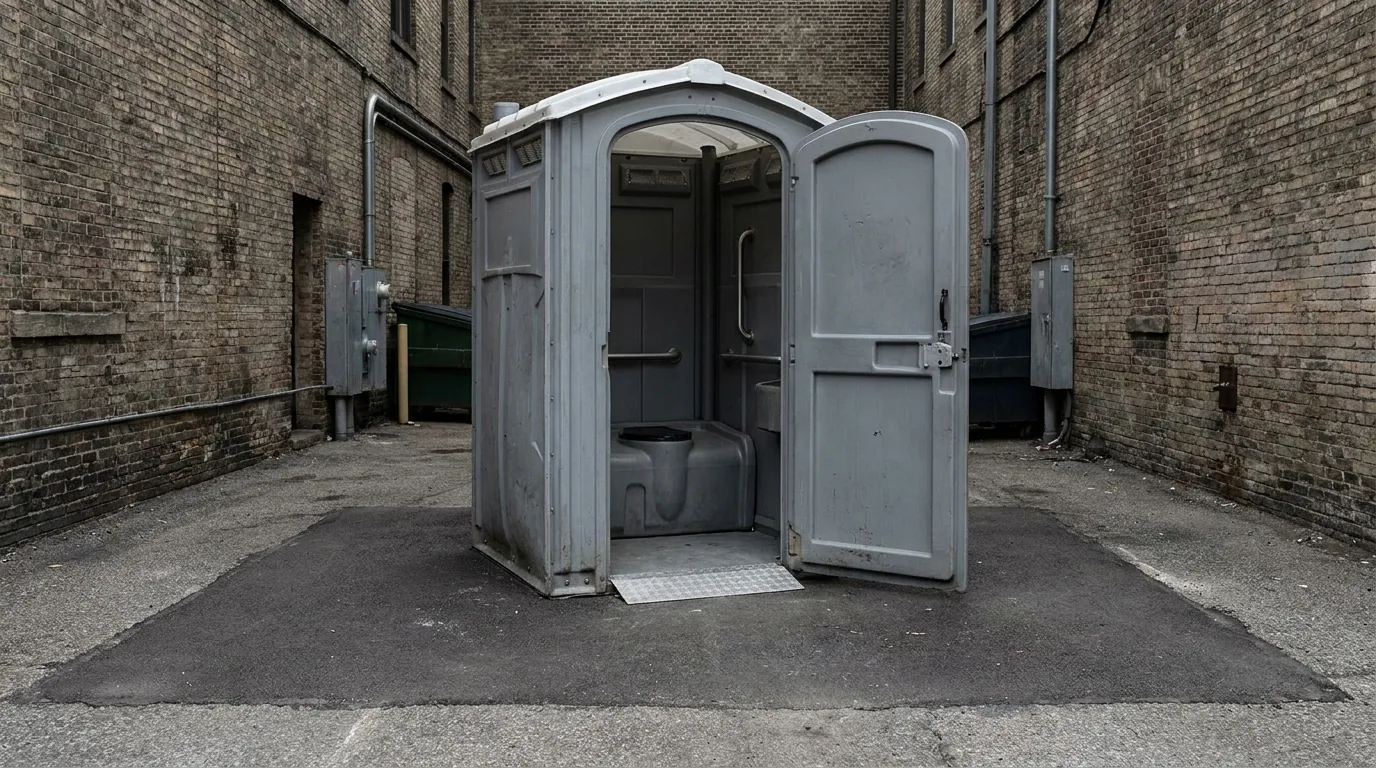
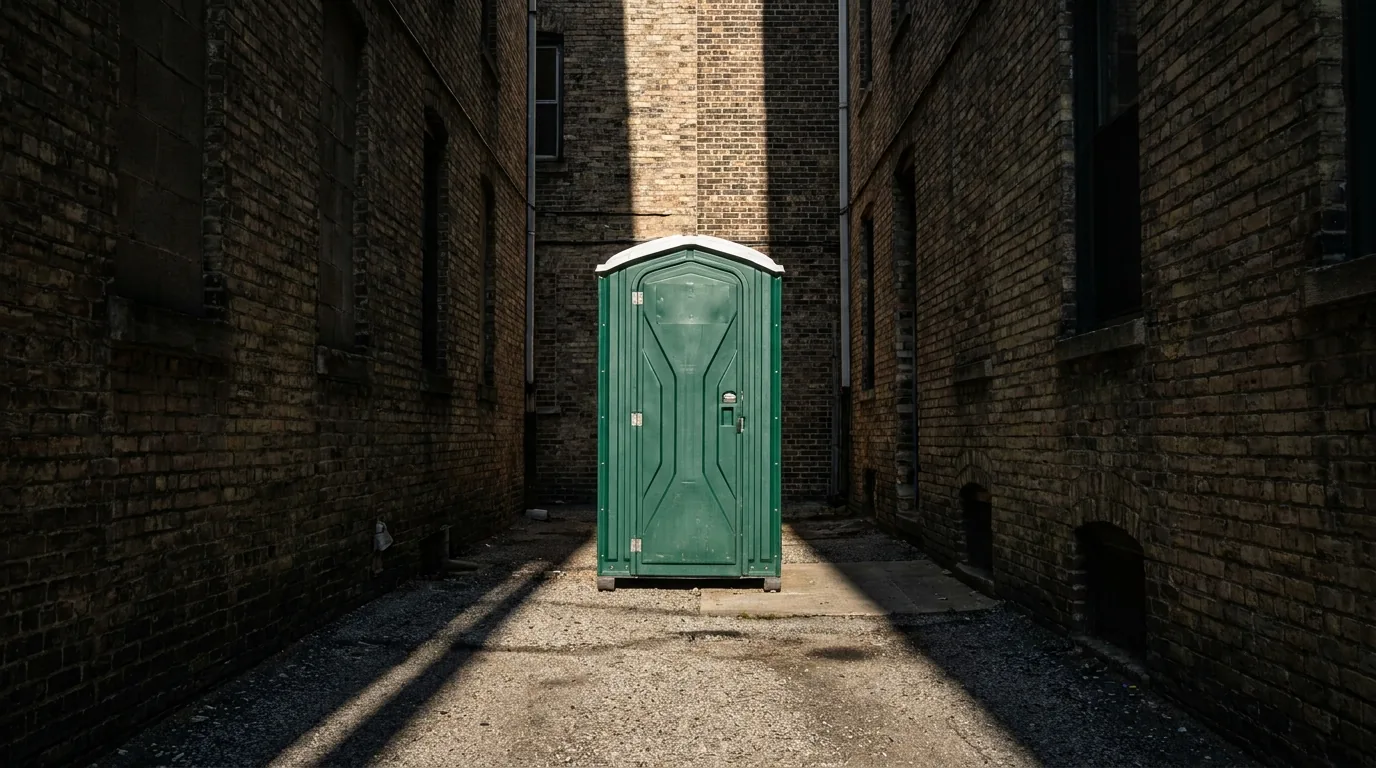
Standard porta potty
$125 to $250 a weekend
Columbus, OH
A standalone porta potty on your own property usually needs no city permit, but a dumpster or container placed in the public right-of-way in Columbus does, under City Code Chapter 903. That permit is an occupancy permit issued by the Department of Public Service. Rules differ by placement, so confirm before delivery day, and if you have run into porta potty rules and regulations in other Ohio cities, know that Columbus runs its own separate process.
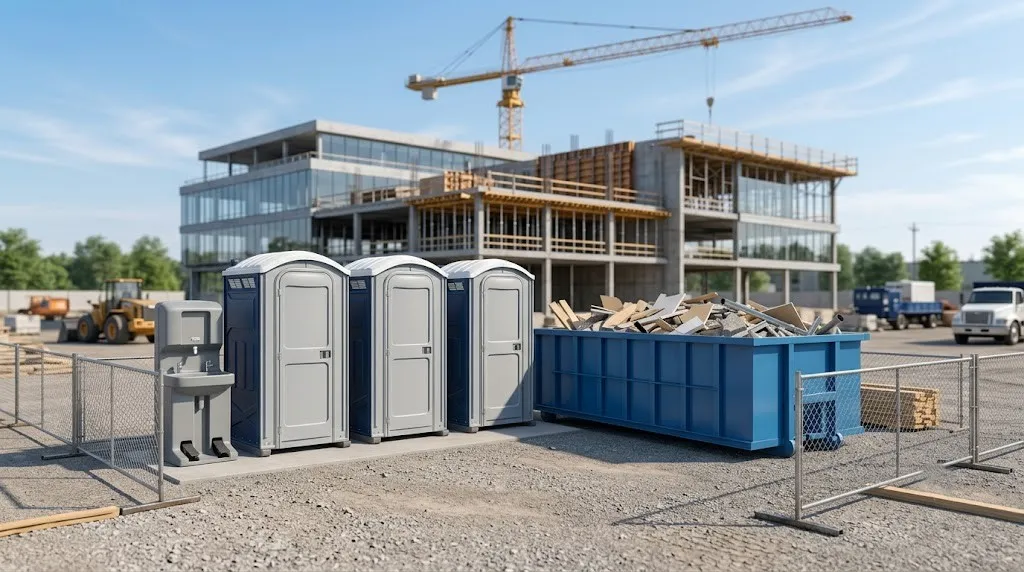
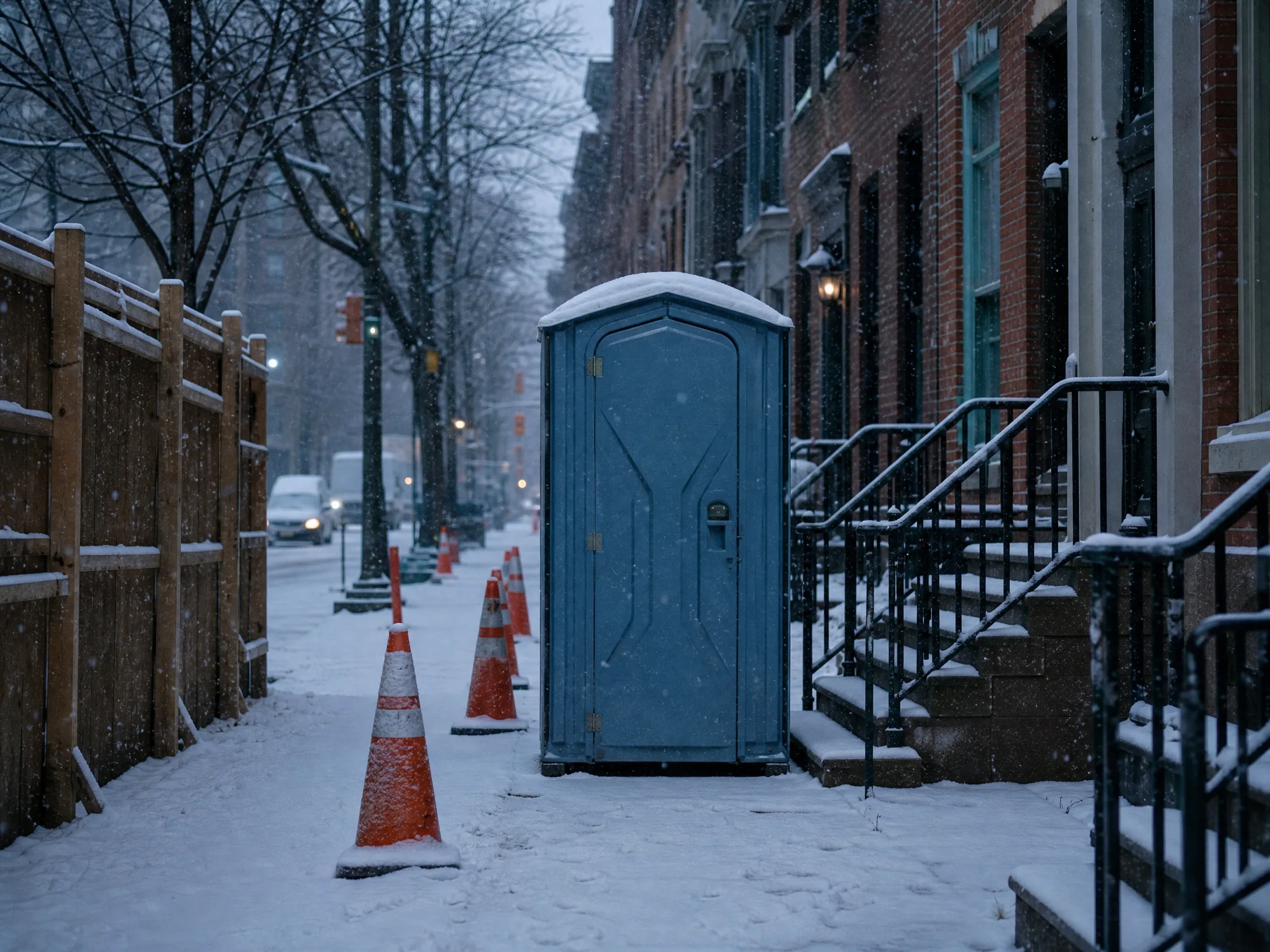
If your unit sits on private property, driveway or job lot, Columbus Porta Pros generally does not need a city permit to deliver it. The picture changes once the toilet, or any container, sits in the street, on a sidewalk or in a curb lane. Columbus City Code Chapter 903 requires anyone occupying the right-of-way of a public street or alley for a construction-related purpose to hold an occupancy permit, issued through the Administrator of Infrastructure Management. The city's own guidance names dumpsters, PODs and crane lifts specifically. Portable toilets are not named either way in the documents we reviewed, so treat curb placement as needing the same confirmation you would run for a temporary fence rental or a storage container rental. We will ask where you want the unit before we quote your porta potty rental, because that answer changes the paperwork. If you are planning a job near Grandview Heights, 5.0 miles west of downtown Columbus, or out toward Bexley, 6.2 miles southeast, the same right-of-way question applies at the city or township line, not just downtown. The same logic holds farther out: a portable toilet rental in Delaware, 24.7 miles north, or porta potty rental in Delaware, OH falls under Delaware's own permit desk, not Columbus Chapter 903, so a Delaware porta potty rental job needs its own check with that city.
Yes, and this is where most Columbus jobs actually get flagged. Chapter 903 explicitly covers dumpsters and containers placed in the right-of-way, with occupancy permits capped at seven days unless a longer term gets approved in advance. That is the answer to "do you need a permit for a dumpster" on a Columbus street: if it is on the pavement or blocking a parking lane, yes. If a dumpster sits over a parking meter space, you also owe the meter fee on top of the permit. This is a separate track from a Chapter 906 permit, which covers non-construction right-of-way use like a moving truck. If you are pairing a roll-off dumpster rental with restrooms on the same site, check both, and the same applies to a roll-off dumpster rental in Delaware, which sits outside Columbus city limits and outside Chapter 903 entirely. Our dumpster permit requirements page walks through Chapter 903 in more detail, and dumpster rental cost covers what a permit adds to your total. Jobs staged closer to Whitehall, 8.6 miles east, or Gahanna, 10.1 miles northeast, still fall under the same city process if they touch Columbus right-of-way.
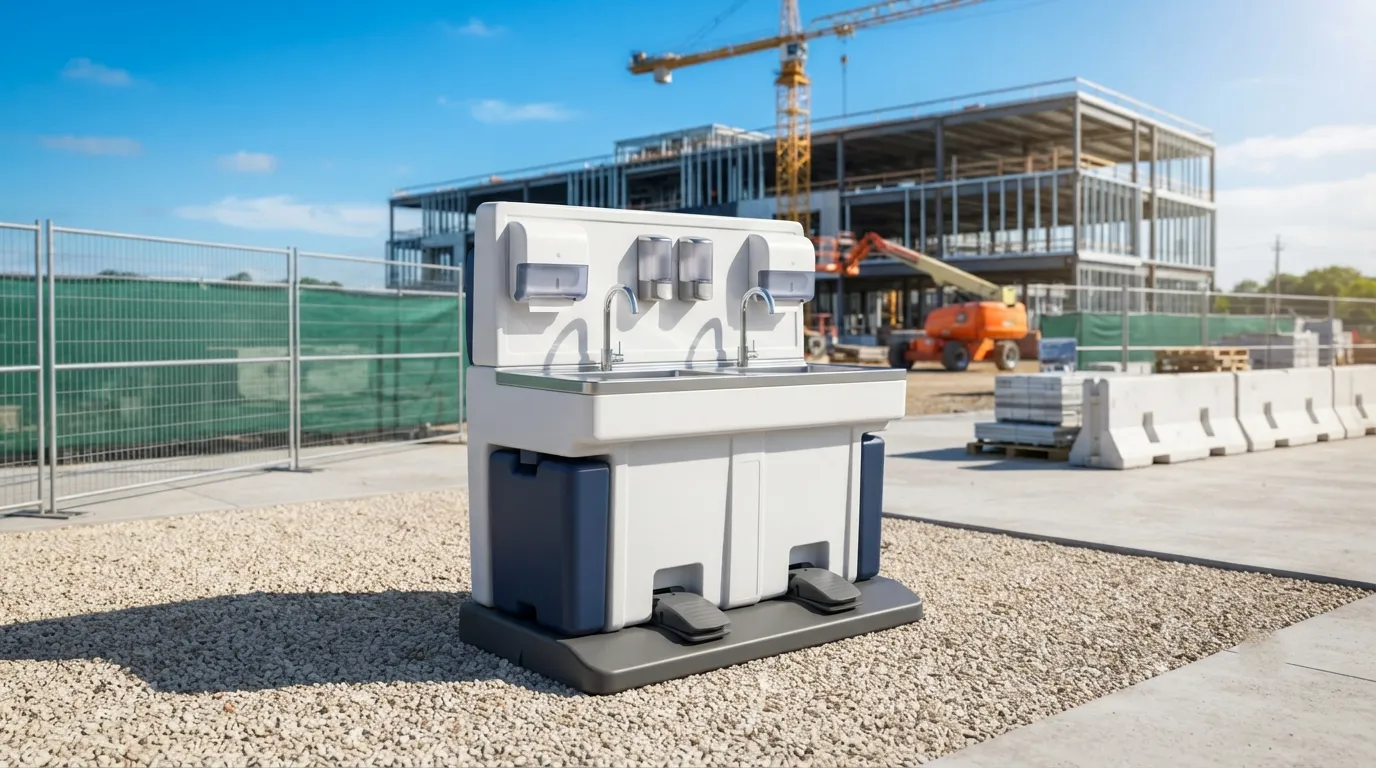
City permitting is one layer; OSHA compliance is another, and it applies regardless of where the unit sits. Under OSHA 1926.51(c)(1), construction sites need one toilet facility for 20 workers or fewer, with additional seats and urinals as crew size grows. Ohio field-labor operations follow a similar logic under OSHA 1928.110, which sets one facility per 20 workers within a quarter mile walk. Placement rules on private ground come down to access and stability more than permits: ADA Standards 302.1 requires a stable, firm, slip-resistant surface, and a clustered set of single-user units must include at least one accessible unit under ADA Standards 213.2. Our porta potty placement guide covers ground conditions and clearance in more depth, and how many porta potties do I need walks through the ratio math for your crew size. For a full breakdown of the OSHA table, see OSHA portable toilet requirements.
A light tower or a temporary power pole run alongside your restroom trailer can trigger its own electrical inspection, separate from any right-of-way occupancy permit. GFCI protection under OSHA 1926.404(b)(1)(ii) applies on the job regardless of permit status, and any power drop feeding a restroom trailer rental or handwashing station rental should be planned before delivery, not after. If your site needs a temporary power pole alongside a light tower rental, loop in your electrician early, since a temporary power pole permit and a right-of-way occupancy permit do not always move on the same timeline. This matters most on downtown Columbus builds where curb space, power drops and restroom placement all compete for the same few feet of frontage.
| Item | Typical permit trigger |
|---|---|
| Porta potty, private lot | Usually none |
| Porta potty, street or right-of-way | Confirm with city, not clearly named in Chapter 903 |
| Dumpster or container, right-of-way | Chapter 903 occupancy permit required |
| Dumpster over a parking meter | Permit plus meter fee |
| Moving truck, non-construction | Chapter 906, not Chapter 903 |
Chapter 903 permits are issued through the Right-of-Way Permit Section at the Michael B. Coleman Government Center, 111 N. Front St. Fee amounts were not published in the documents we checked, so ask the city directly rather than assume a number. This gap is common; similar questions come up for a temporary fence cost job or a storage container rental cost quote where the unit sits close to a curb, and it is not unique to Ohio either, since a contractor asking about a Jersey City dumpster permit runs into the same kind of right-of-way paperwork under a different city code.
Yes. Chapter 903 requires an occupancy permit for any dumpster placed in the public right-of-way, capped at seven days unless the city approves a longer term. Placement on private property does not trigger this. Check our dumpster permit requirements page before delivery.
Generally no. Private property placement, including driveways and job lots, typically falls outside Chapter 903, which targets right-of-way occupancy. Confirm with the city if your driveway abuts a shared alley. See porta potty rental in Columbus for standard delivery details.
Occupancy permits under Chapter 903 are limited to seven days unless a longer term is approved in advance as part of the permit process. Plan ahead if your construction dumpster rental will sit curbside longer than a week.
Yes. Dumpsters and construction-related occupancy fall under Chapter 903. Moving trucks and similar non-construction uses fall under Chapter 906. The two are administered separately by the city, so do not assume one permit covers both uses.
The Right-of-Way Permit Section, part of the Department of Public Service, handles this. Their office sits on the first floor of the Michael B. Coleman Government Center, 111 N. Front St. Reach out through contact if you want help figuring out which permit applies.
What we rent
Typical Columbus ranges, not a quote. Delivery is $50 to $150 and a weekly service visit $30 to $60. See the full cost breakdown.
$125 to $250 a weekend
$200 to $350 a weekend
$199 to $300 a weekend
Quoted by stall count
The rest of the yard
We deliver across Franklin County and the surrounding metro:
Next step
Tell us the address, the dates and the headcount. We size the order and confirm the route.